


Automated PCB Assembly Services
Our automated PCB assembly services cover solder paste application, SMT placement, reflow soldering, in-line inspection, and board-level traceability on four JUKI SMT lines, from prototypes to series production.
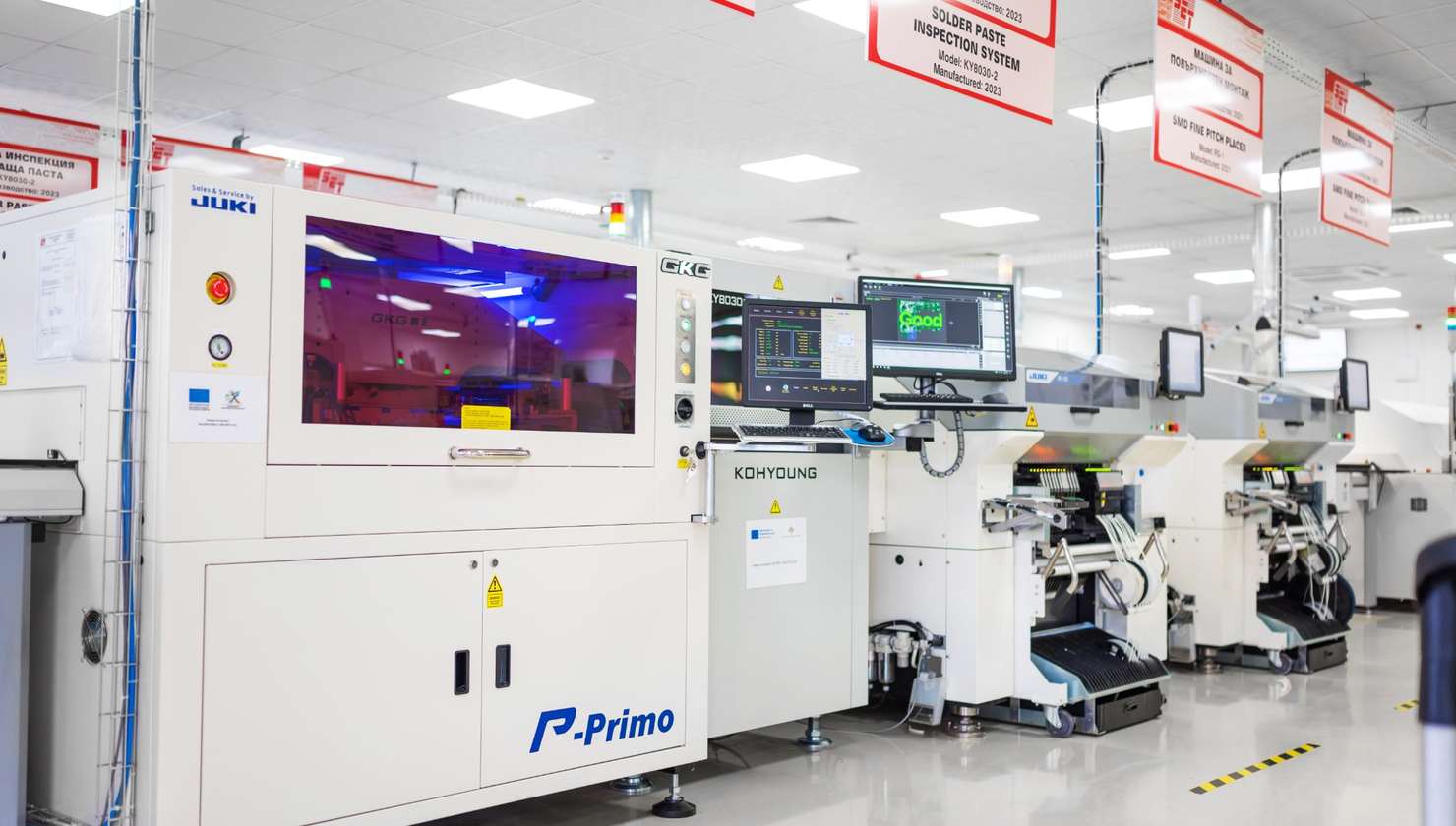
Automated PCB Assembly Services Within Our EMS Production
At Steiner Elektronik, automation covers more than component placement. Solder paste application, SMT placement, reflow soldering, SPI, AOI, and barcode labeling run as one automated sequence, and each board is tracked through production.
While the main process is automated, PCBs may also include through-hole or manually handled components. Where required by the design, these operations can be integrated into the same overall production workflow.
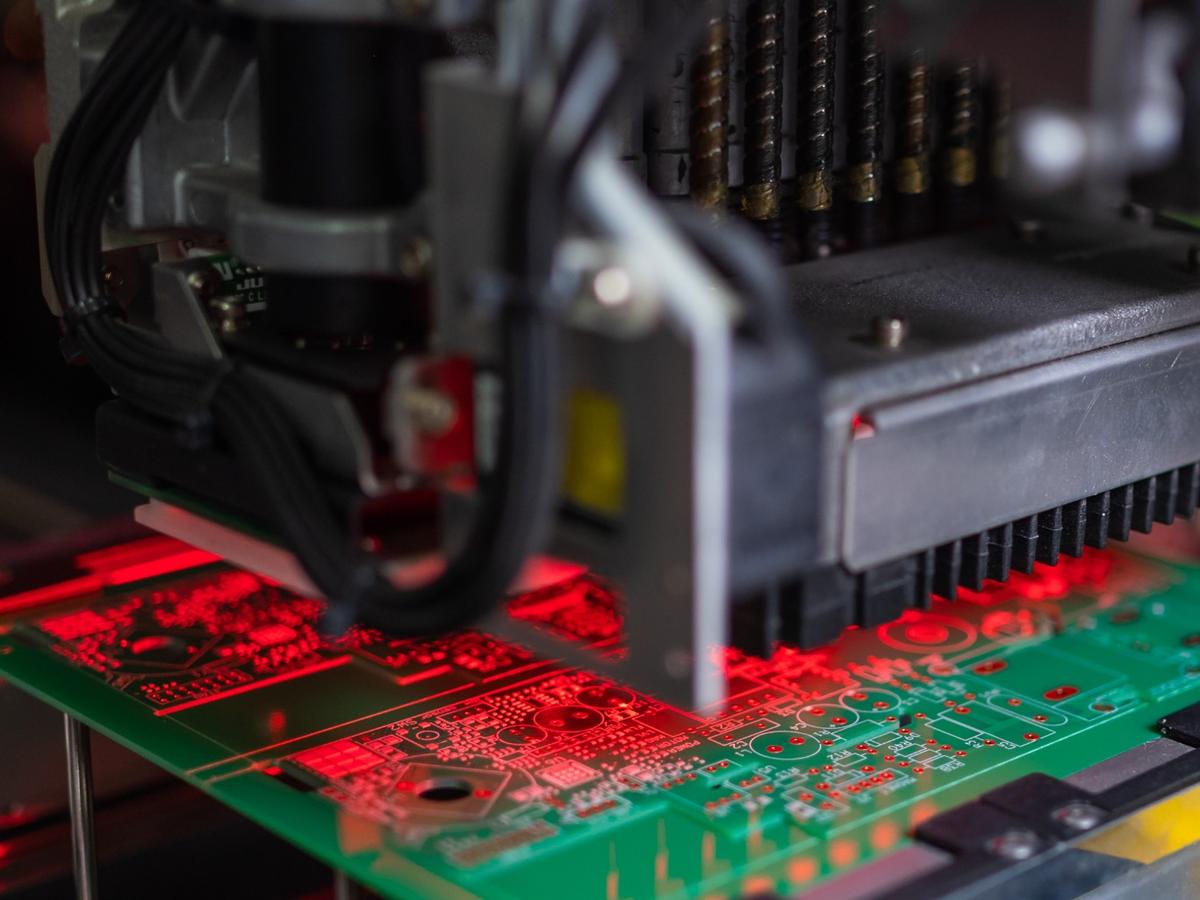
When to Choose Automated PCB Assembly
Automation makes the most sense when the components can be machine-placed, and the board is either too dense to build reliably by hand or will be built more than once.
A board doesn’t have to be fully machine-assembled to use this process. Connectors, through-hole parts, and components that need individual handling are usually added after SMT assembly, using selective, wave, or manual soldering.
Our Automated PCB Assembly Capabilities
The SMT lines sit in the same facility as our THT, manual assembly, and testing areas. The parts of a project that suit automation run on the lines, and the rest is handled alongside without becoming a separate job.
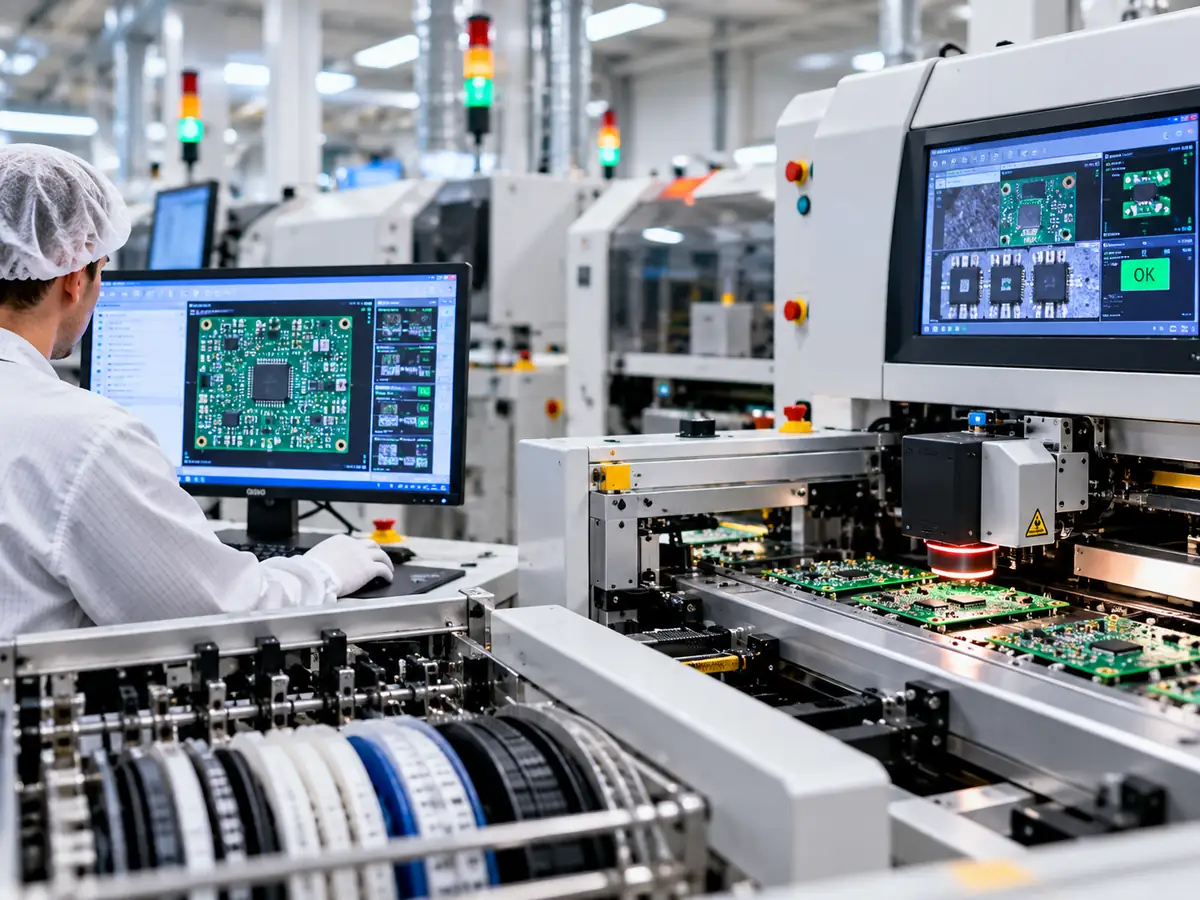
Automated Process Control
Automated SMT production is carried out according to defined production parameters and work instructions. Key elements of our process control include:
Quality Control for Automated PCB Assembly and Soldering
We control quality throughout the production process, from the preparation of production programs to final inspection and testing. Experienced specialists develop, verify, and maintain the programs that run our automated production and inspection equipment, supporting consistent process execution and reliable quality control.
SPI measures the solder paste deposits after application and before placement. Insufficient, excess or offset paste is a common cause of solder defects. At this stage, it can be corrected before any components are on the board.
After reflow, 3D AOI checks the assembled board for missing, misaligned or incorrectly oriented components and for visible solder faults such as bridges.
We run production under ESD control, and ISO 9001 quality management and ISO 14001 environmental management standards support our processes.
Automated PCB Assembly for Different Production Volume
Automated assembly is not limited to mass production. What matters is whether the board and its components suit machine assembly, and whether the design is likely to be built again.
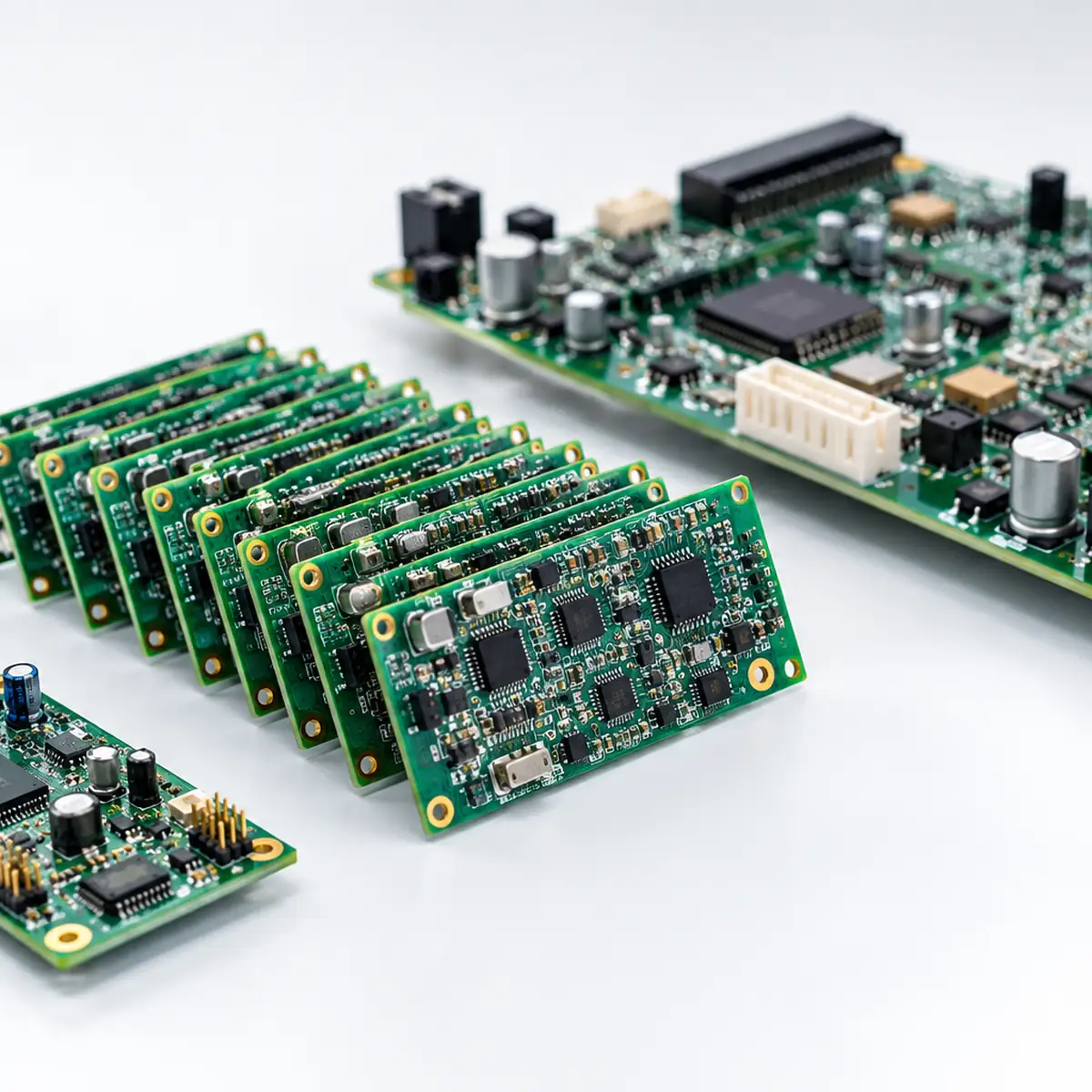
Typical Applications for Automated PCB Assembly
Most boards we build on automated lines combine dense SMT circuitry with the need for repeatable production. Typical examples:
Why Choose Steiner Elektronik for Automated PCB Assembly Services?
Four JUKI SMT Lines
Up to 250,000 components per hour for automated component placement.
Automated Process Control
Defined production parameters, work instructions and process monitoring support consistent production.
In-line SPI and 3D AOI
Automated inspection helps identify process deviations during production.
Barcode-based Production Traceability
Boards can be tracked through defined production stages.
Production Programming
Experienced specialists prepare, verify and maintain programs for automated production and inspection equipment.
Prototypes to Series Production
Automated production capabilities support both initial builds and recurring series production.
What to Send Us for a Quote
Complete data lets us see early which operations can run on the SMT lines and which need additional processing. It also cuts down on questions during quoting.
FAQ
What is automated PCB assembly?
Automated PCB assembly uses production equipment for the repeatable stages of PCB manufacturing, mainly solder paste application, SMT placement, reflow soldering and inspection. THT or manual assembly can be added to the same workflow when the board needs it.
When is mixed SMT and THT assembly needed?
When a single board carries both surface-mount and through-hole components. This happens when a design needs dense SMT circuitry plus parts that must be through-hole for strength or power, such as connectors, transformers, relays and power terminals.
What is the smallest component Steiner Elektronik can place automatically?
Our JUKI SMT lines place components down to 01005 (0.4 × 0.2 mm).
Can automated PCB assembly services be used for prototypes and small batches?
Yes, when the PCB design and component packaging suit machine assembly. For very small quantities or designs that are still changing, manual assembly can be more practical.
Can automated SMT assembly be combined with THT assembly?
Yes. SMT components are placed and reflowed first, and through-hole components are then soldered by selective, wave or manual soldering, according to the PCB design.
How are automatically assembled PCBs inspected?
SPI checks the solder paste before placement, and AOI checks the board after reflow. X-ray, ICT, functional testing and visual inspection are added where the project requires them.
Can Steiner Elektronik procure PCBs and electronic components for automated PCB assembly services?
Yes. We can procure PCBs and components based on your BOM, or work with customer-supplied materials.
What information do I need to provide for an automated PCB assembly quote?
The essentials are Gerber data, the BOM, pick-and-place data and the required quantity. Please also flag any components that need THT or manual processing. The full list is in the quote section above.

Get in Touch
Your electronics – our passion