
Manual PCB Assembly Services

Our manual PCB assembly services cover components and production steps that require individual handling or cannot be efficiently processed on automated equipment. Manual assembly can be a standalone production step or part of one workflow with SMT, THT soldering, inspection, and testing.
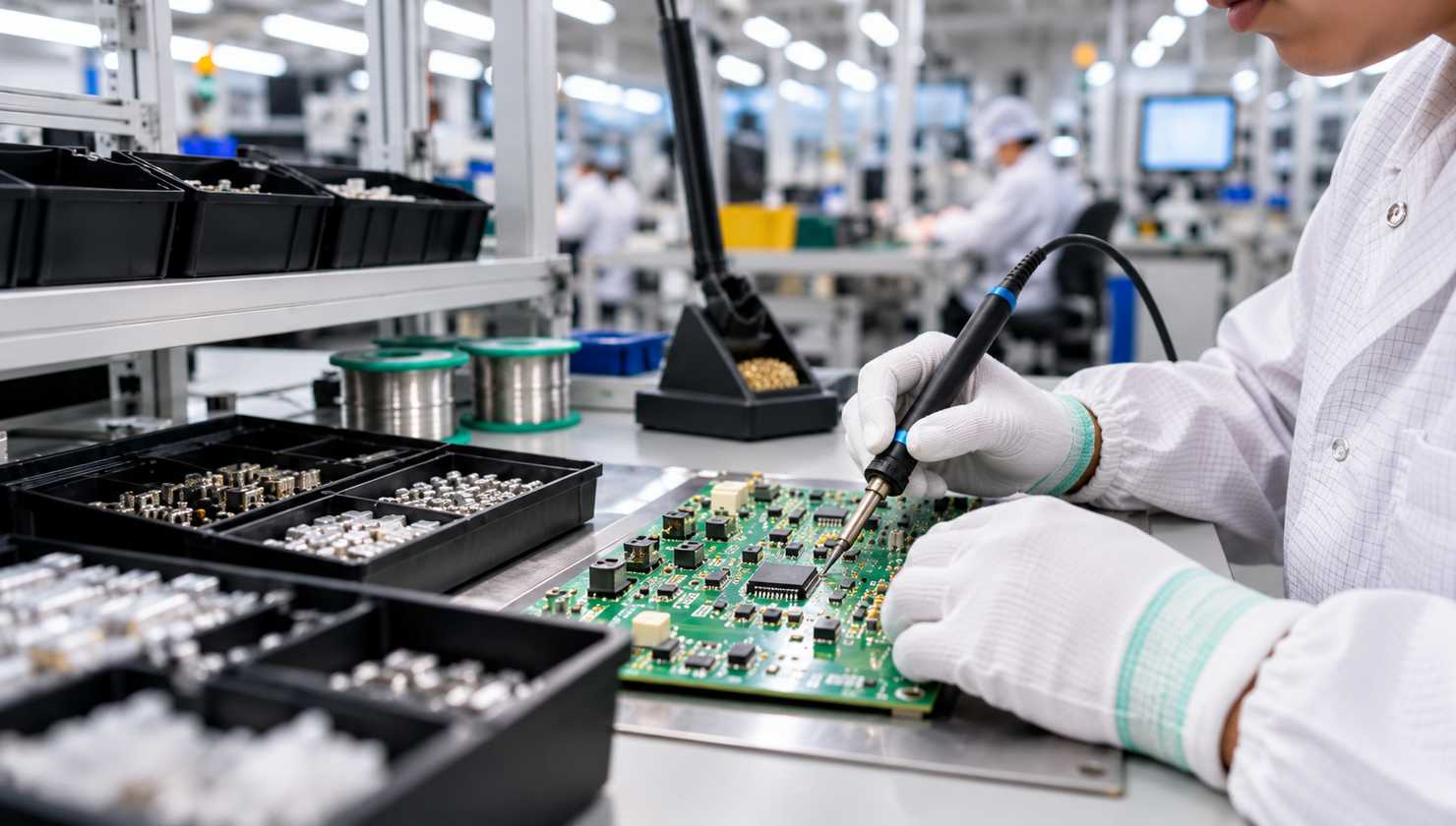
Manual PCB Assembly

Hands-On Assembly Within Our EMS Production

Steiner Elektronik provides manual PCB assembly for electronic assemblies that need hands-on placement, insertion, soldering, or other controlled manual operations.

Manual processes are used where the PCB design, component type, or production requirements make automated processing unsuitable or unnecessary. We combine them with automated SMT placement, reflow soldering, selective or wave soldering, inspection, and testing where needed. Both automated and manual steps are managed within the same facility.

Production takes place in Ruse, Bulgaria, with sales and customer support from our German office (SET GmbH Steiner Elektronik Technologie).
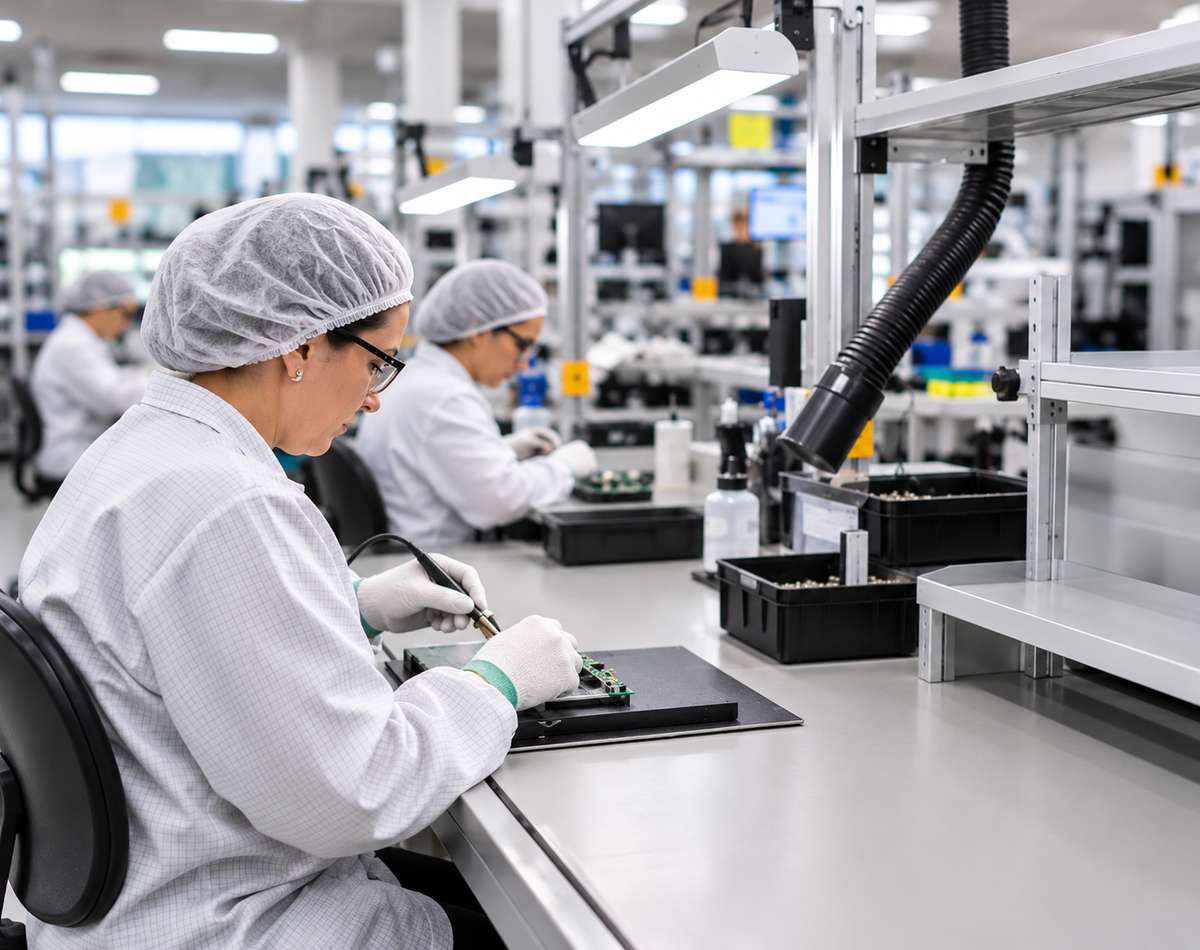
Manual PCB Assembly

When to Choose Manual PCB Assembly

While automated production lines are suitable for most PCB assembly processes, manual assembly is essential for components, production steps, or order quantities that require individual handling or are not suitable for automated equipment.

Typical situations include:

  • Larger or unusual components:  Heavy parts, irregular shapes, and components that need careful orientation are often easier to place and secure by hand.
  • Heat-sensitive components: Some parts should not pass through a reflow oven or solder wave, so they are fitted and soldered after the thermal processes are complete.
  • Prototypes and smaller runs: At low quantities, automated line setup may not be justified for every component.


  • Odd-form and non-standard through-hole parts: Components without feeder-compatible packaging or with non-standard lead forms may require manual insertion.
  • Connectors, terminals and mechanical parts: These are often added after machine assembly, particularly when they would interfere with earlier production steps.
  • Rework and modifications: Existing assemblies can undergo controlled component replacement, correction, or modification.

A board does not need to be assembled entirely by hand because a few components require it. In many cases, manual work covers selected components on an otherwise automated assembly.

Our Manual PCB Assembly Capabilities

Manual PCB assembly adds flexibility to Steiner Elektronik’s automated production for designs and components that need hands-on processing.

The workstations are in the same facility as our automated SMT lines and three ERSA selective soldering lines, so we can plan manual operations into the production sequence from the start.

For more information about through-hole production, see our THT PCB Assembly services.

   Our capabilities include:

  • 50 manual WELLER workstations
  • Manual component placement and insertion
  • Manual THT assembly
  • Manual soldering
  • Handling of larger and specialized components
  • Assembly of components not suitable for automated placement
  • Controlled rework and manual processing where required
  • Visual inspection
  • ESD-controlled production
  • Barcode-based production traceability

Hand Soldering for PCB Assembly

Hand soldering is used when individual components or solder joints need controlled manual processing rather than automated soldering. It works alongside reflow, selective, and wave soldering, not as a replacement for them.

  • Heat-sensitive components that cannot go through reflow or wave soldering

  • Through-hole parts in positions that selective or wave soldering cannot reach

  • Connectors, terminals, wires and odd-form parts added after automated assembly

  • Rework, component replacement and touch-up of individual joints

On a mixed board, SMT components may be placed and reflowed first. Through-hole components can then be processed by wave or selective soldering where suitable, with the remaining components soldered by hand. This limits hand soldering to the joints that actually need it.

Manual PCB Assembly

Controlled Manual Assembly and Soldering

Manual assembly and hand soldering are carried out under defined production conditions to ensure consistent and repeatable results. Our manual processes are integrated into the same quality and production system as our automated assembly operations.

Key elements include:

  • Trained operators for manual assembly and hand soldering
  • Defined work instructions for assembly and soldering operations
  • Controlled soldering processes according to the requirements of the specific assembly
  • ESD protection throughout manual production and handling
  • Defined soldering quality requirements and acceptance criteria
  • Visual and process inspection during and after manual operations
  • Production and inspection according to applicable IPC requirements

How Our Manual PCB Assembly Process Works

01
PCB and Electronic Component Procurement
02
Incoming Material Inspection
03
Production Preparation
04
Automated and/or Manual Component Placement and Insertion
05
Manual Soldering Where Required
06
Visual and Process Inspection
07
Final Testing
08
Final Inspection and Delivery

When a board combines automated and manually handled components, the manual operations are built into the overall assembly workflow rather than treated as a separate job.

Quality Control for Manual PCB Assembly and Hand Soldering

Manual operations follow the same controlled production and quality approach as our automated processes. Operators work to defined production procedures in an ESD-controlled environment, while barcode-based tracking provides traceability through production.

Inspection can take place during assembly, after soldering and during final testing. Available methods include:
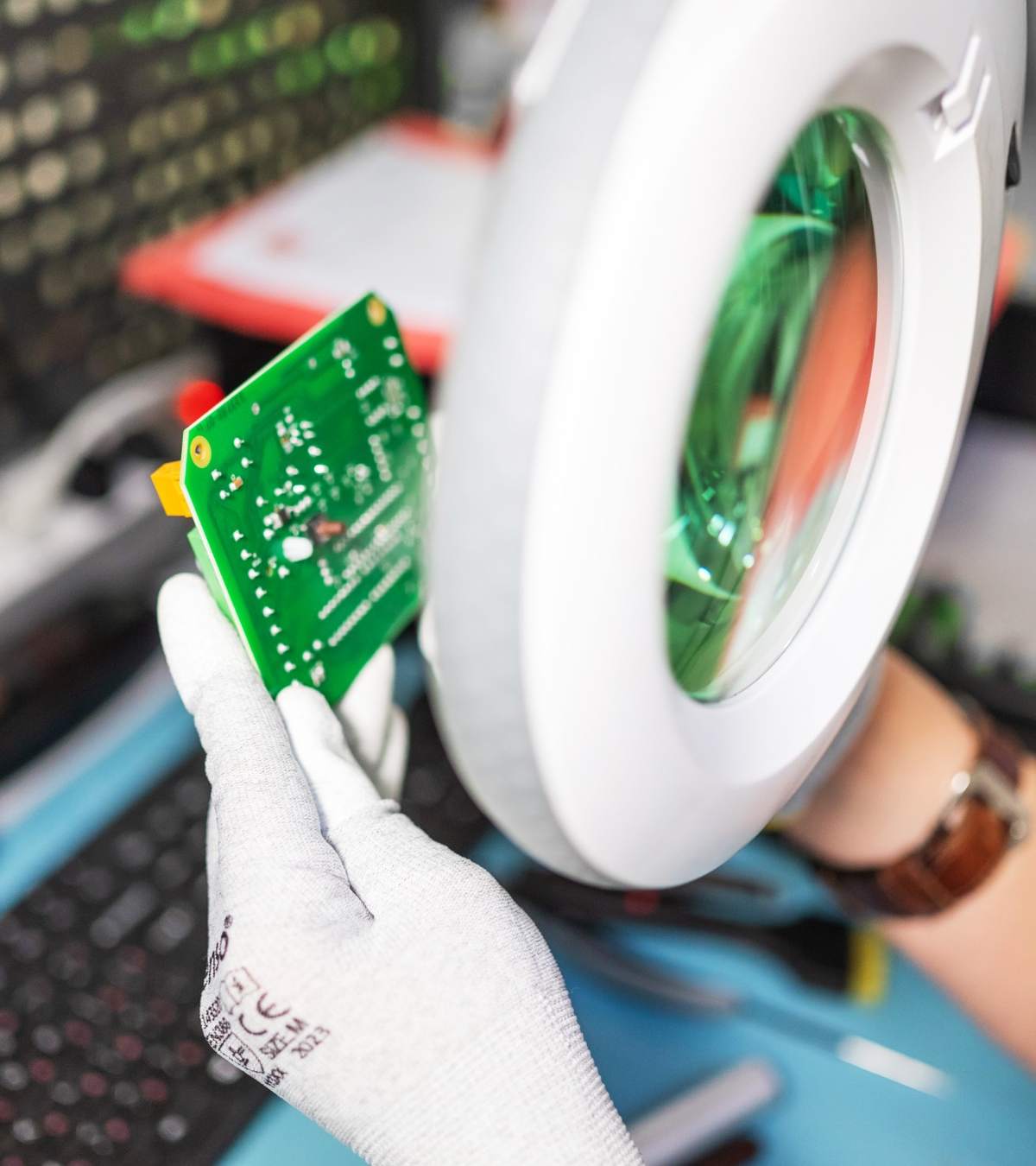
  •  Visual inspection

  • Automated Optical Inspection (AOI), where applicable
  • X-ray inspection, where required
  • In-Circuit Testing (ICT)
  • Functional testing
  • Process inspection

The inspection method is selected according to the assembly and project requirements rather than applying the same test sequence to every board, and our production processes are supported by established quality management standards, including ISO 9001 and ISO 14001.

Manual PCB Assembly

Manual PCB Assembly for Prototypes and Small Batches

Manual processes are especially useful at lower quantities, but they are not limited to prototype production.

  • Prototypes: Early builds often change between revisions. Manual assembly allows individual components to be handled without committing every production step to an automated setup.
  • Small Batches: For limited quantities and specialised component mixes, manual placement and soldering can be more practical than automating every operation.
  • Complex Assemblies: Boards containing components that standard automated equipment cannot process can combine automated and manual steps in one build.
  • Series Production:  When particular components or operations continue to require individual handling, manual processes can remain part of recurring production alongside automated SMT and THT processes.

The decision is made component by component and process by process. A series-production board can still contain a small number of manually assembled parts.

Typical Applications for Manual PCB Assembly

The reason for manual work differs by application.

Typical examples include:

  • Industrial Electronics: Hand soldering of screw terminals, connectors, and specialized parts on control and monitoring boards, often in lower-quantity runs.
  • Industrial Machinery & Automation: Manual fitting of heavy connectors, terminal blocks and mechanical parts added after automated SMT and reflow.
  • Power Electronics: Hand assembly of larger through-hole and power components such as transformers, chokes and large capacitors that are unsuitable for automated placement.
  • Medical Electronics: Controlled manual placement and soldering of components requiring individual handling, inspection or documentation.


  • Energy & Power Equipment: Manual fitting of larger power parts, busbars and high-current terminals on boards that combine automated circuitry with hand-assembled components.
  • Communication Equipment: Hand soldering of RF connectors, shielding cans, and interface components added after the automated SMT stage.
  • Prototype Electronics: Full or partial hand assembly of early and limited runs, where feeder setup and program creation for every component isn’t justified.
Manual PCB Assembly

Why Choose Steiner Elektronik for Manual PCB Assembly Services

Manual and automated processes run in the same facility and are managed as one production project.

  •  50 Manual WELLER Workstations: Dedicated capacity for manual assembly and hand soldering.
  • Manual and Automated Production Combined: Components can move through SMT, reflow, selective, wave, and manual processes based on the board’s requirements.
  • In-House Inspection & Testing: We handle assembly, inspection, and testing in the same production environment.
  • PCB & Component Procurement: We can source PCBs and electronic components based on your BOM.
  • 50+ Years of Experience: Established electronics manufacturing experience across different assembly technologies.
  • EU Production, German Support: Manufacturing in Ruse, Bulgaria, with sales and customer support from our German office.

What to Send Us for a Manual PCB Assembly Quote

Complete production data helps us determine which operations should be handled manually and which can be integrated with automated production. It also reduces unnecessary back-and-forth during quotation and production planning.

  • Gerber data and drill/hole information
  • Board structure details
  • BOM (Bill of Materials)
  • Testing requirements, if known
  • Pick-and-place file, if the board includes SMT components
  • Notes or drawings for components requiring special handling
  • Quantity and whether you supply the PCBs and components or require full turnkey procurement

FAQ

What is manual PCB assembly?

Manual PCB assembly is the placement, insertion, and soldering of components by trained operators rather than automated equipment. It is used for components or production steps that need individual handling, often alongside automated assembly on the same board.

When are manual PCB assembly services used?

They are used when components cannot be efficiently placed or soldered by machine. Examples include large, odd-form or heat-sensitive parts, connectors and terminals, prototypes and rework of existing boards.

Can Steiner Elektronik combine manual and automated PCB assembly?

Yes. Manual operations can be integrated with automated SMT placement, reflow, selective and wave soldering, inspection and testing within one production workflow.

How are manually assembled PCBs inspected and tested?

Visual inspection can be used throughout manual assembly and soldering. Where required, further inspection and testing can include AOI, X-ray, ICT, and functional testing.te for automation.

What types of components can be assembled manually?

Typical examples include through-hole components, connectors, terminals, transformers, relays, heat-sensitive parts, odd-form components and certain mechanical parts.

Does Steiner Elektronik provide manual THT assembly and soldering?

Yes. We provide manual THT insertion and hand soldering. Through-hole components can also be processed using selective or wave soldering when the PCB design and component requirements allow it.

Are manual PCB assembly services suitable for prototypes and small batches?

Yes. Manual assembly can be practical when quantities are limited or when specific components do not justify automated setup. Automated processes can still be used for the other parts of the same assembly.

Get in Touch
Your electronics – our passion

Contact Us

STEINER ELEKTRONIK LTD
Privacy Overview

This website uses cookies so that we can provide you with the best user experience possible. Cookie information is stored in your browser and performs functions such as recognising you when you return to our website and helping our team to understand which sections of the website you find most interesting and useful.